Be yourself; Everyone else is already taken.
— Oscar Wilde.
This is the first post on my new blog. I’m just getting this new blog going, so stay tuned for more. Subscribe below to get notified when I post new updates.
Be yourself; Everyone else is already taken.
— Oscar Wilde.
This is the first post on my new blog. I’m just getting this new blog going, so stay tuned for more. Subscribe below to get notified when I post new updates.
What you have learnt and how:
I have learned to be clear with my inspiration and take inspiration from multiple examples, print them, and take note of what aspects I like the most from each one. This way I will know how I can create something original and go on with the creative process from there. I’ve learned to be more open to different styles of typography and being more experimental with type as it has a very big impact on the overall effect of the poster. I think type is treated secondly most of the time but if it’s not right and doesn’t relate with or compliment the image then the message isn’t as strong as it could be.
I learned that sketchy drawings can actually be made to look very effective if you do it right, not everything has to be cleanly illustrated.
I also learned that making work that you’re passionate about brings out the best work, or work that you feel proud of.
What worked:
Being more hands on with my imagery by exploring different media and how they reflect the subject of the image made a huge impact on the pathos of my topic. the scribbly, dirty quick effect used with the charcoal translated anger, mystery and darkness etc.
The process of the final work makes the results more effective
what could have been handled better:
Something that set me back was the fact that I had a work that I found interesting at the beginning of the process and it stuck with me throughout the making of one of my posters. So if I were to do this assignment again I would document all of my inspiration and compare it to my work to make sure I’m not accidentally replicating something that’s already been done. Instead I will do as I have stated above with the printing of my inspiration etc.
A very common feeling toward Te Reo Māori is fear of mispronunciation/ being corrected or infringing on what isn’t there’s/ not wanting to risk stepping over tapu (sacred) lines. Where I sympathise and understand, if this continues the everydayness of Te Reo Māori and our culture will dissipate. People need to start refraining from correcting people in an all-knowing manner and celebrate effort. Furthermore, Te Reo Māori is an Official language of New Zealand and therefore belongs to all New Zealanders so there is no line to cross when speaking the Reo, if anything it’s disrespectful to not speak Maori.
The viewer is confronted with very dark images related to Māori culture through the contemporary take on traditional cultural imagery which gives the initial connection of Māori culture and an additional feeling of fear. Both posters are a visual depiction of what New Zealanders feel when they challenge the idea of saying a Māori word.
The wehi for both of my posters is fear, the personal fear of mispronunciation and the fear of losing our language. The first poster demostrates this through a common fear of the dark and the grim reaper (personification of death). The second poster shows this through the use of koru patterns on the skull to represent moko, so the ‘maori skull’ is a personification of the death of the language, along side the blood spill.
The poster directs the viewer to the Maori language week website with the text “be strong, speak Māori”, which after the heavy imagery makes them feel they want to make change.
Kaumatua ultimately make decisions will soon die out, younger generation of maori who are aware of current social norms will be in power and ultimately will make the decisions in the future
Te Reo speakers will be at an advantage
All regions outside Auckland and Wellington have Māori dominated local government
Government increasingly important to know the reo
The reapers face is replaced with a tiki (symbolism of life) which contradicts the meaning of death with the realistically alive and well Māori language.
The second poster demonstrates fear through the skull which is also a representation of death, along with the ‘blood’ spill
The rhetoric for my first poster plays on a few meanings, the main one being fear. This is shown through a common fear of the dark. I have taken the concept of the grim reaper (personification of death) and replaced his face with a tiki (symbolism of life) and changed the score to a taiaha, both weapons. The style of the image is a resemblance of whakairo (carving) used and practiced by Maori since the 1500’s.
Rhetoric poster 1:
– plays on traditional maori whakairo
Wehi:
Rhetoric poster 2:
Ihi:
Wehi:
General:
the fear of mispronounciation leads to not speaking te reo and the language consequently dying
imagery is what they feel
fear of stepping over tapu lines
fear of infringing on what isn’t there’s
fear of sounding stupid infant of their friends
fear of getting it wrong – no-one wants to be wrong – no-one wants to be corrected
Depth:
Kaumatua ultimately make decisions will soon die out, younger generation of maori who are aware of current social norms will be in power and ultimately will make the decisions in the future
Maori world will be rulers of NZ
Te Reo speakers will be at an advantage
all regions outside auckland and wellington
government increasingly important to know the reo
wellington tribunal
This week was about refining and fine tuning, I was made aware that my poster was similar to another poster which I had found interesting at the beginning of the term. This set me back a little as I tried to find ways I could re-design and make the poster my work. I went on to create thumbnails and experimented different styles with the same concept.
I have included examples of what I went from for my new poster in my workbook
My attempt at a typographic approach was quickly eliminated by myself as it was taking too much time for me to think of how I could make it an effective rhetoric but I’m glad I tried.
This week I feel as though I did a lot of refining of one of my concepts but think I should explore a different path. I did a lot with my “dying language” concept which consisted of skull and tiki subject matter. Seeing everyones posters on the wall today made me realise my concept wasn’t necessarily the one to stand out. I was quite disheartened by the amount of red, black and white. I tried using a different colour in my poster, green, the colour of pounamu, but it wasn’t as strong and wasn’t as quick to identify my topic as red white and black are the Māori colours.
I moved on to a more typographic approach and will be exploring ways I can integrate a clear rhetoric with type and image combination.
Heres what I’ve done so far
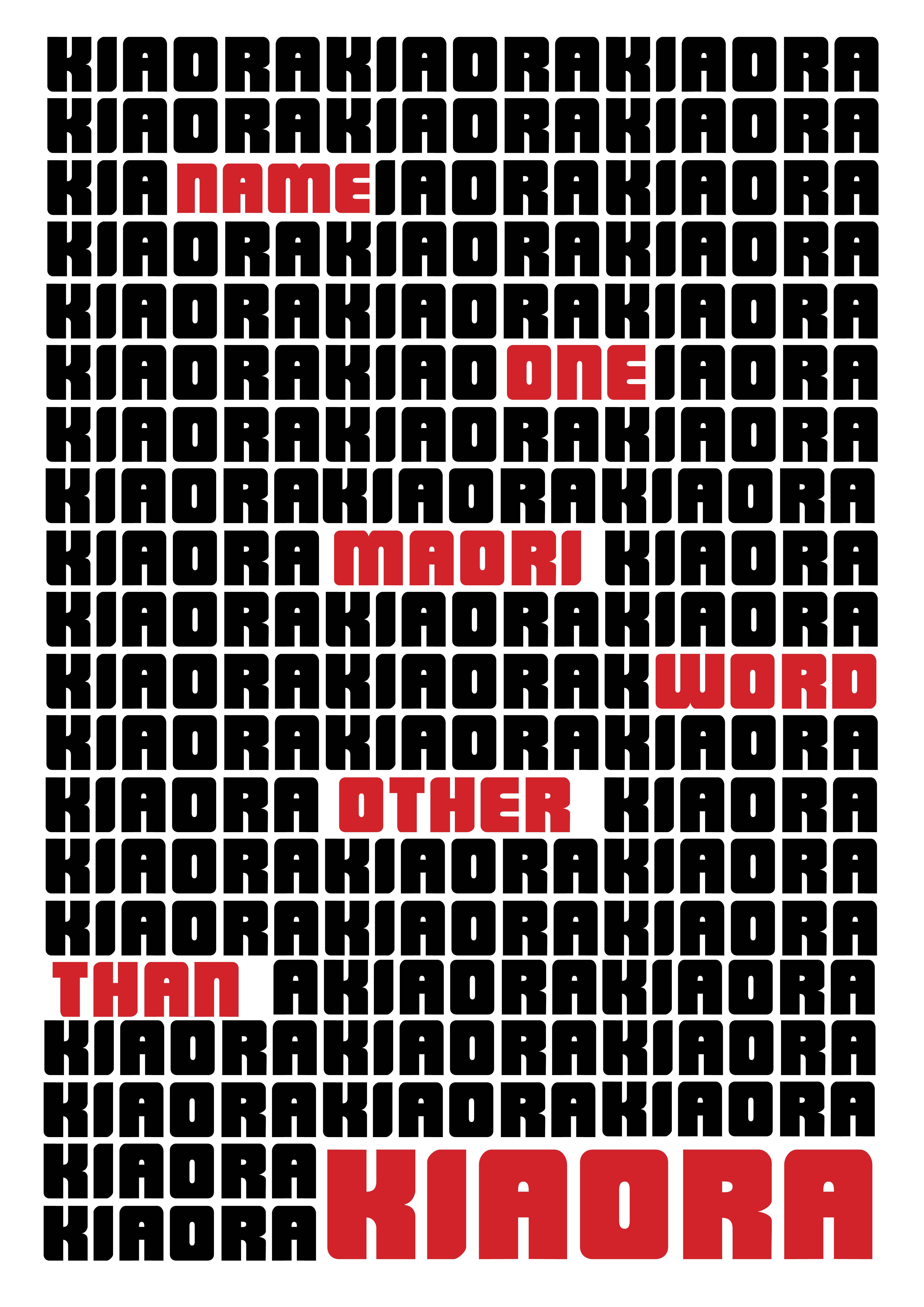
I like the repetition as is dramatises the fact that the most common Māori word known by non Māori speakers is kia ora – hello. It challenges the viewer to think if they do know any other Māori words and if not, might inspire them to learn
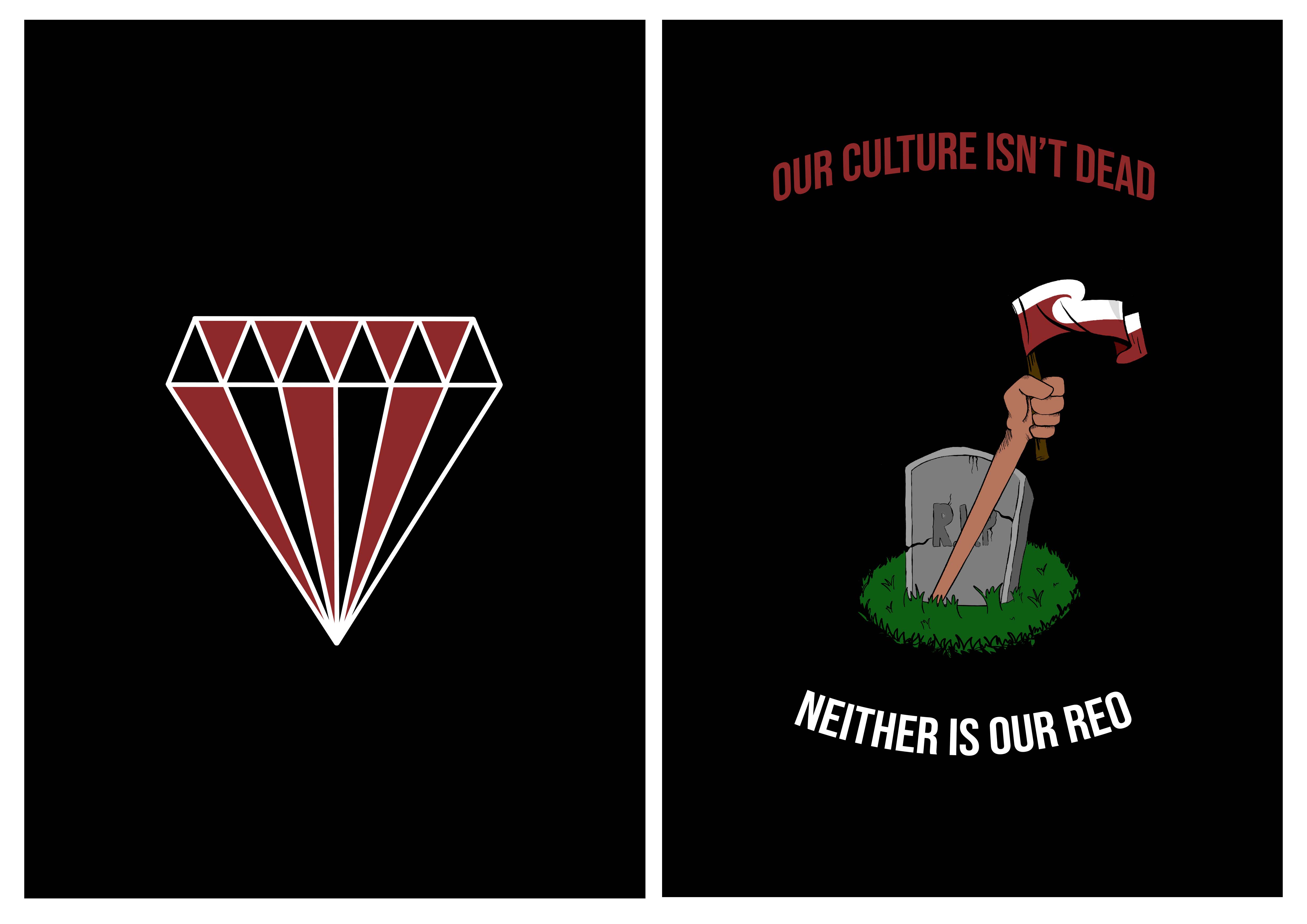
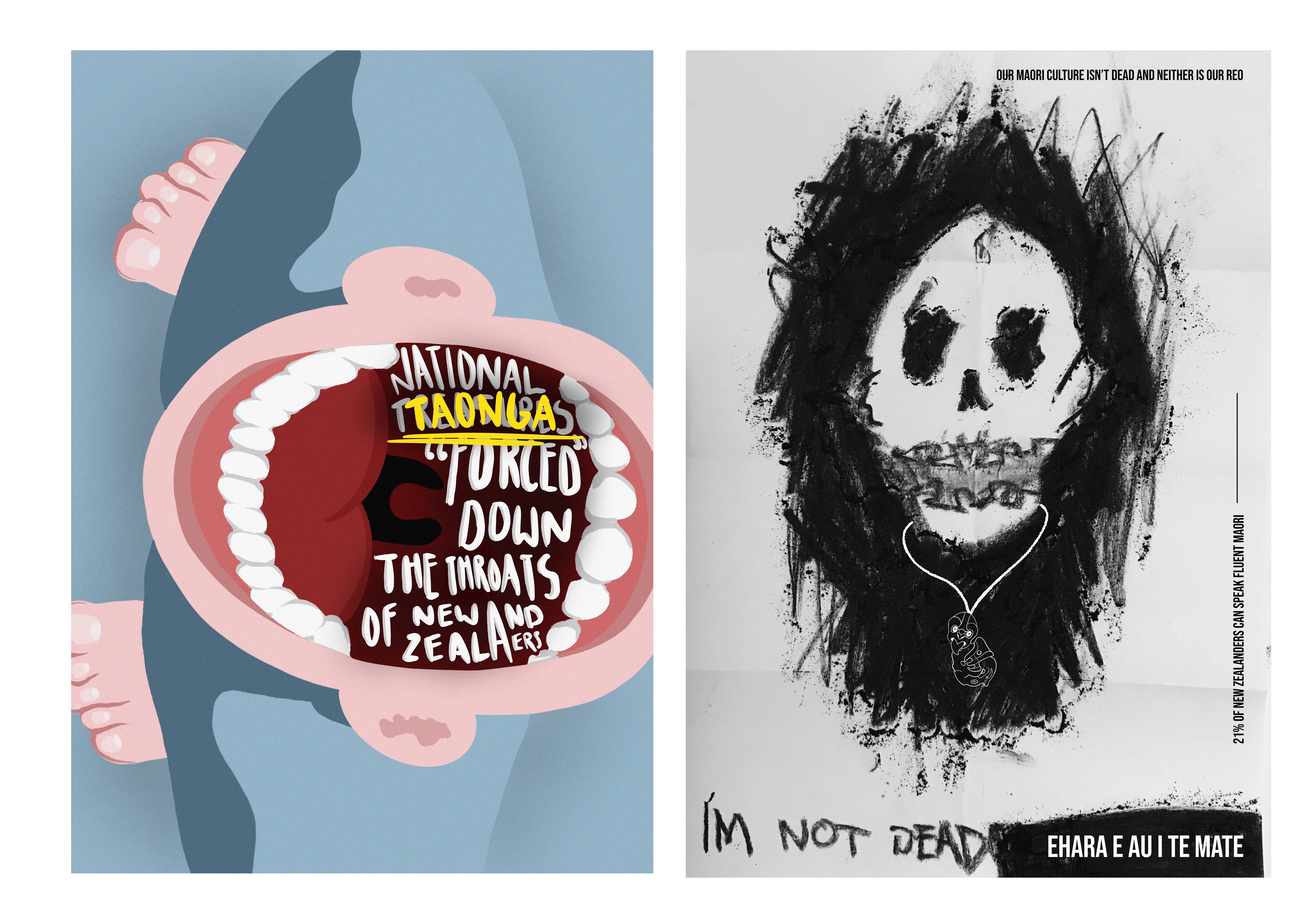

This art work by Peter Robinson focuses on the fixation people have with how much Māori they are genetically and not how much Māori they truly are.
This week we made poster concepts based on articles we were given and then we researched articles to do with our subject. As my topic is quite current this wasn’t too difficult.
Then we made posters based on a proverb we were given and our topic. I was given “one mans trash is another mans treasure” which I though was quite well fitted with my topic as there are current debates relating to the importance of the language, where one side stands, te reo and maori culture is their entire life, their treasure, and the other side believes it’s a completely useless language and don’t care for it at all.
This week we learned about rhetorics and how to convey a message through imagery that triggers emotions and relativity in terms of subject matter and how people perceive these things. We brainstormed inequalities in NZ and in general. This helped spark an idea for my project subject. I’m very passionate about my Maori culture and learning te reo as it changed my life and is on its way up. After the oppression in the 80s, the language was seen as a ‘taonga’, which is a sacred gift. Something that is precious and seen as being very important. But I see this term as being out of reach and rare. I’d like to see Te Reo as a normality in New Zealand in the future.
We were given 2 words to make 10 concepts with, I got race and tree, then race and shallow, then race and love. This was quite a challenge, but helped me generate ideas of how I can make concepts quickly.

 Georgia Hood Ihi Wehi